Crochet · 3 min read
Tapestry Crochet Pattern Maker: Build a Usable Colorwork Chart
Reduce an image into strong shapes that remain clear once stitches change its proportions. This tapestry crochet pattern maker guide focuses on decisions you can verify while you work, so the final chart is not only attractive on screen but practical to make.
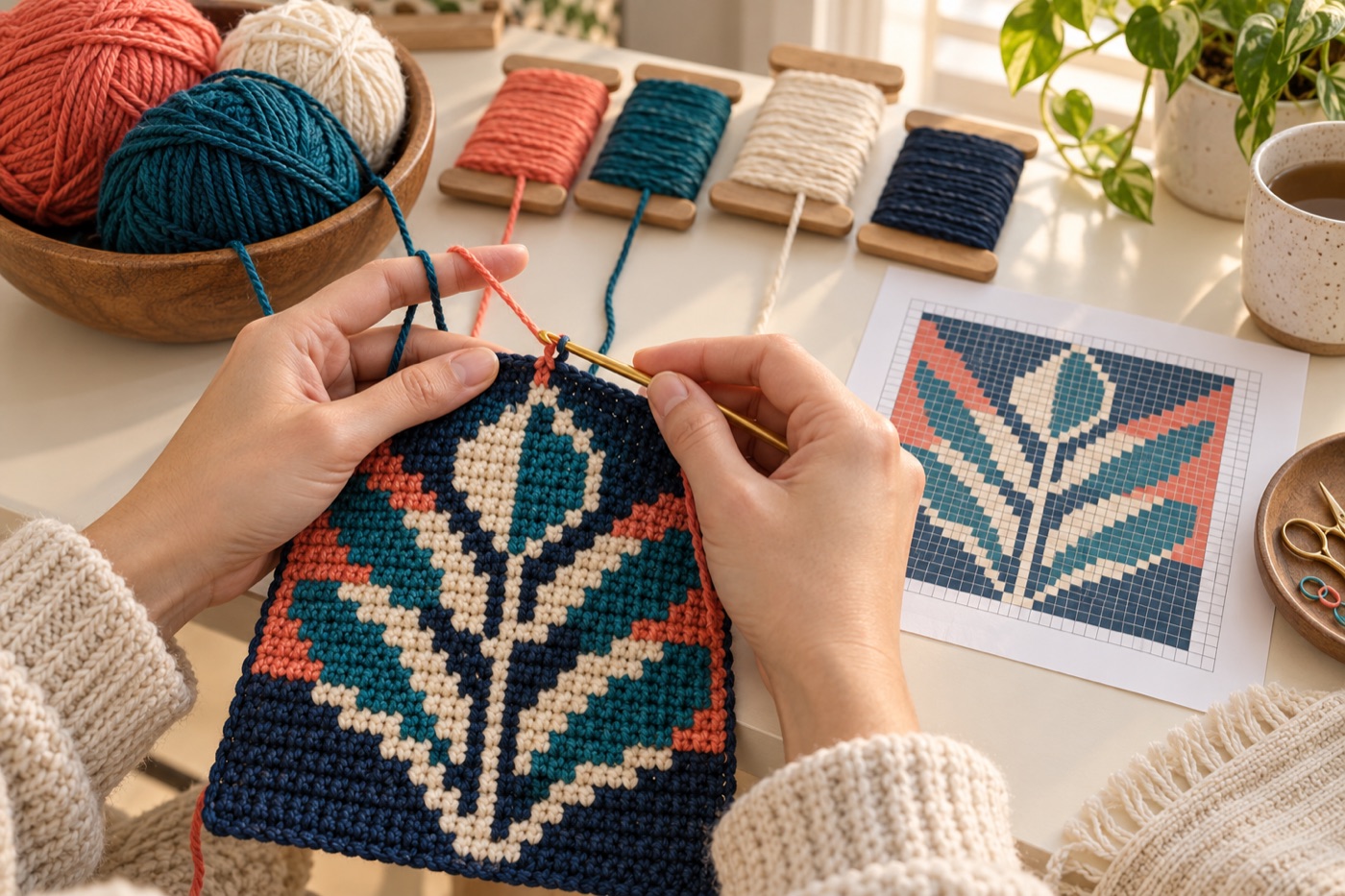
Design for stitches rather than screen pixels
A tapestry-crochet chart should emphasize strong blocks and a motif that stays recognizable when rendered by stitches. Measure a swatch in the planned stitch and yarn to see whether the cells are visually square. If the fabric stretches the picture vertically, adjust the chart proportions rather than assuming a square image will stay square. Keep enough plain background around the motif that a border can be added without crowding the design. Use a small test emblem before converting a detailed illustration.
Plan where unused colors travel
In tapestry crochet, the handling of inactive yarn changes the thickness and appearance of the fabric. A design with a single contrasting color running across a broad background can require carrying that color through many stitches. Draw the path of each color across several sample rows and decide whether the chosen technique handles it neatly. Avoid isolated one-stitch color changes unless they are essential to the motif. Simplifying a tiny highlight can make the finished fabric cleaner and reduce the number of starts, stops, or visible carries.
Label turns and the viewing side
For rows worked back and forth, the viewing side alternates as the fabric is turned. Number the chart from the actual starting edge, place an arrow on each row, and test any asymmetrical lettering before making a long strip. If your method works in rounds, mark the seam and confirm the motif closes without a partial repeat. A color chart alone does not specify these construction choices. Write them next to the image so the next maker knows how to interpret the squares.
Check tension with a small repeat
Crochet a sample containing at least one complete color repeat. Check whether the carried yarn shows through the foreground and whether the piece puckers when the inactive strand is pulled too tightly. Compare the sample to the chart at normal viewing distance. If a small feature disappears, enlarge it by one or two stitches in the pattern rather than forcing tighter tension. Record the yarn, hook, stitch, measured gauge, and carrying method with the final chart; changing any of them can change the look of the same digital design.
What to share with the next crocheter
A useful published chart names the stitch and construction direction and explains how the inactive yarn is handled. Without those choices, two makers can follow identical colored squares and make different fabrics. Add the measured gauge, motif dimensions in stitches, and the number of background columns on both sides. Mention whether the sample was worked flat or in rounds. If only the digital motif has been tested, label it as a motif chart rather than a complete checked pattern.
Continue with BeadArtify
Open the free pattern maker to test your image, continue in the full pattern designer, or browse the original community gallery for color and scale ideas. Your source image is processed locally in the browser.